Pope to Vatican Observatory: Church Embraces Science to Find God in Creation
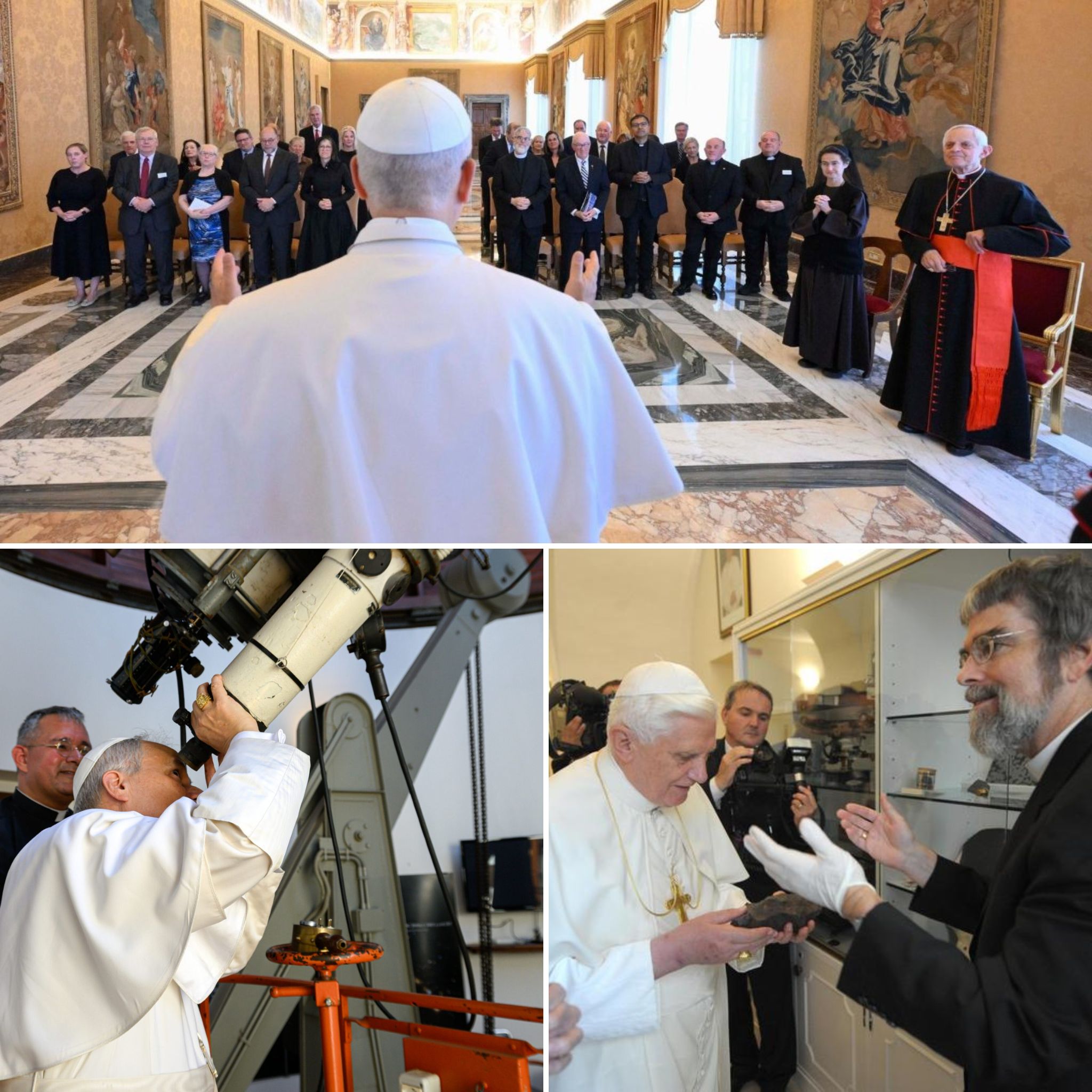
In an unprecedented moment of reflection and revelation, Pope Leo XIV addressed a crowd at the Vatican Observatory Foundation, making a bold statement about the future of science and faith. The Pope underscored the Catholic Church’s commitment to pursuing “rigorous, honest science” as a means of understanding the divine — not as a contradiction to religion, but as an extension of it. He spoke about the long-standing desire to explore God’s creation through the lens of scientific inquiry, particularly through the field of astronomy.
Pope Leo XIV’s address comes at a pivotal moment, one that transcends the traditional divide between faith and science, showing that they are not adversaries but complementary forces. The Vatican’s support for scientific exploration, especially in fields like astronomy, highlights its belief that understanding the universe is part of the divine calling of humanity.
The Vatican’s Commitment to Science: A Historical Perspective
The Vatican’s relationship with science has been fraught with complexities over the centuries. Historically, the Catholic Church was seen as an institution that resisted scientific advancements, most famously during the trial of Galileo Galilei in the 17th century. Yet, as Pope Leo XIV reminded his audience, the Church has a long history of promoting and supporting scientific endeavors. This commitment can be traced back to the re-founding of the Vatican Observatory in 1891 by Pope Leo XIII, at a time when science was often viewed as a challenger to religious authority.
Pope Leo XIII’s decision to establish the Observatory marked a turning point, emphasizing that the Church was not at odds with science but was embracing it. “Everyone might see clearly that the Church and her Pastors are not opposed to true and solid science, whether human or divine, but that they embrace it, encourage it, and promote it with the fullest possible devotion,” the Pope said in his address.
This was a declaration that the pursuit of knowledge — especially through the lens of science — could be a way of exploring and understanding God’s creation.
The Vatican Observatory: A Bridge Between Faith and Science
The Vatican Observatory is not just a scientific institution; it’s a symbol of the Church’s evolving stance on the relationship between faith and science. Located in Castel Gandolfo, Italy, the Observatory is one of the oldest astronomical research institutions in the world. It houses state-of-the-art telescopes and conducts cutting-edge research on astrophysics and cosmology. The Observatory serves as a bridge between the ancient faith and modern science, demonstrating that the Church’s embrace of science is not a mere gesture but a genuine pursuit of truth.
Pope Leo XIV, in his address, remarked that the Church’s desire to study the heavens through astronomy is an essential part of its identity. He emphasized that through the study of the cosmos, humanity is granted a glimpse into the vastness of God’s creation, inviting a deeper sense of awe and reverence.
Faith and Science: The Church’s Current Stance
As Pope Leo XIV spoke to the Board of the Vatican Observatory Foundation, he reflected on the present-day challenges facing both faith and science. He acknowledged that the world today faces an insidious threat: the denial of objective truth. “Too many in our world refuse to acknowledge what both science and the Church plainly teach,” the Pope remarked. This sentiment is crucial in an era where both scientific facts and religious principles are increasingly being questioned.
According to the Pope, the issue is not merely about religious belief or scientific facts but about humanity’s collective responsibility to care for the Earth. Both faith and science, he pointed out, point to a common truth — that we bear a solemn responsibility for the stewardship of our planet and for the welfare of those who depend on it. This includes the vulnerable, whose lives are endangered by the reckless exploitation of both the natural world and human resources.

The Beauty of Creation: A Shared Wonder
One of the most striking parts of Pope Leo XIV’s speech was his contemplation on the beauty of the heavens. The Pope spoke about how the natural world — the sun, moon, and stars — are a gift from God, accessible to all, regardless of wealth or status. This, he argued, remains one of the last truly universal sources of joy in a world that has become increasingly divided.
“The gift of being able to gaze at the night sky is one that belongs to all of humanity, rich and poor alike,” Pope Leo XIV said. “It is a treasury of beauty, which should fill us with wonder.” He went on to highlight how contemplating the heavens invites us to reflect on our fears and failings in the light of God’s immensity.
For Pope Leo XIV, the study of the stars and planets isn’t merely an intellectual pursuit; it is a spiritual exercise. By gazing at the vastness of the universe, humans are encouraged to see the limitations of their own understanding and place themselves within the context of a much greater divine reality.
A New Challenge: The Blinding Effect of Human-Made Light
In his speech, Pope Leo XIV also lamented the impact of man-made light, which he believed has obscured our ability to truly appreciate the stars. Light pollution, particularly in urban areas, has made it increasingly difficult for people to experience the wonder of the night sky.
“The lights of the cities have blinded us to the lights God has placed in the heavens,” Pope Leo XIV said. This is where the work of the Vatican Observatory, and the dedication of its researchers, becomes even more important. As the Pope pointed out, the Observatory serves as a place where the “glory of God’s Creation is encountered with reverence, depth, and joy.” It is in places like this that humanity can reconnect with the natural world and seek God through the study of the universe.
The Future of the Vatican Observatory
Looking forward, Pope Leo XIV expressed hope for the continued work of the Vatican Observatory Foundation, particularly in providing educational opportunities for young people. The Foundation runs summer schools and workshops for students, allowing them to study astronomy and explore the wonders of the universe in an environment of faith and reverence.
Through these initiatives, the Vatican Observatory is fostering a new generation of scientists who are not only capable of making groundbreaking discoveries but who also understand the deeper, spiritual significance of their work. This, according to Pope Leo XIV, is how the Church embraces science: not as an adversary, but as a means of understanding the divine.

The Incarnation: God Revealed Through Creation
In his conclusion, Pope Leo XIV reminded the faithful that Christianity is based on the Incarnation — the belief that God made Himself known through His Creation and sent His Son, Jesus Christ, to redeem it. The quest to understand Creation, the Pope noted, is a reflection of the human longing for God, which is present in every human soul.
“The hunger to understand Creation more fully,” Pope Leo XIV said, “is nothing less than a reflection of that restless longing for God, which lies at the heart of every human soul.”
This longing, according to Pope Leo XIV, is what drives humanity to seek answers through both science and faith. It is a desire to understand the world around us, not just for the sake of knowledge, but for the deeper spiritual purpose of knowing the Creator.
Conclusion: A New Era for Science and Faith
Pope Leo XIV’s address to the Vatican Observatory Foundation marks a new chapter in the relationship between science and faith. By embracing science as a means of understanding the divine, the Church is reaffirming its commitment to truth, wonder, and exploration.
As the Vatican Observatory continues its work, exploring the mysteries of the universe, it serves as a reminder that science and faith are not mutually exclusive but are, in fact, two sides of the same coin. Through the study of the cosmos, humanity can come closer to understanding the greatness of God’s creation and, in turn, come closer to the divine.