The case of Cecil Clayton became one of the most disturbing and controversial death penalty stories in modern America, raising painful questions about mental illness, brain damage, and whether a man who no longer fully understood reality should face execution. Convicted of killing sheriff’s deputy Christopher Castetter in 1996, Clayton never denied pulling the trigger. But for years, his attorneys argued the real issue was whether a man missing a significant portion of his brain could truly comprehend his punishment before the state carried it out.
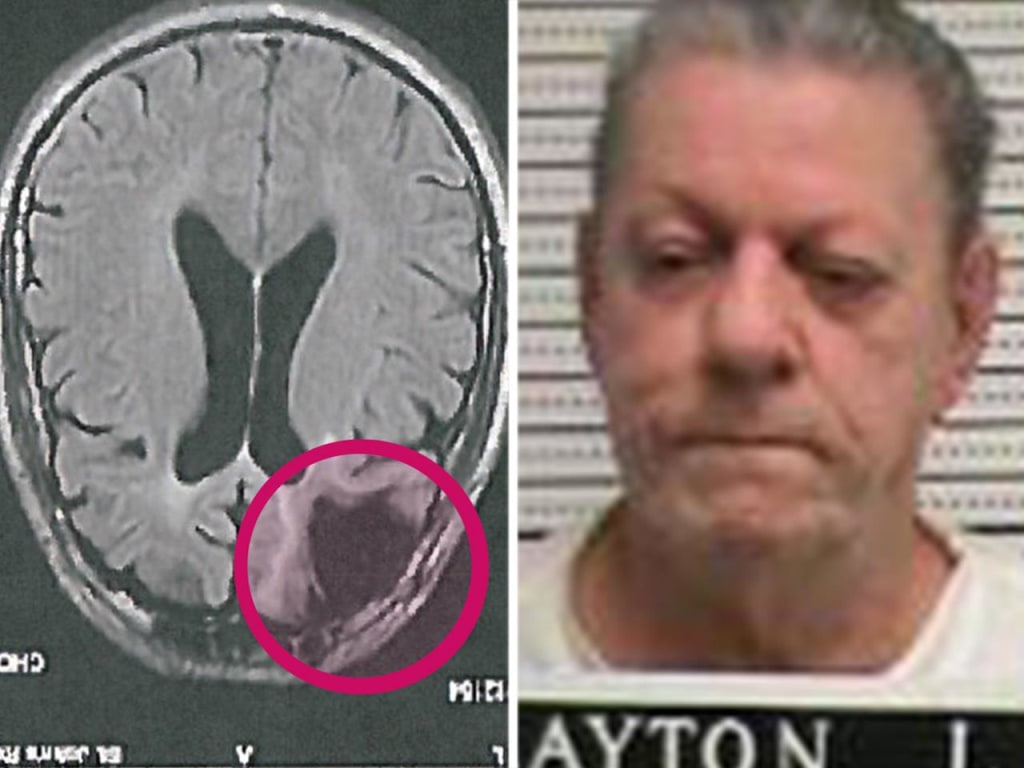
Long before the murder that sent him to death row, Clayton’s life changed forever in 1972 during a devastating sawmill accident in Missouri. According to court records, a large piece of wood shot into his face with such force that fragments of his skull were driven into his brain. Surgeons were forced to remove nearly 20 percent of his frontal lobe — the area responsible for judgment, impulse control, emotional regulation, and decision-making. Friends and family later described dramatic personality changes following the injury, saying Clayton became increasingly unstable, paranoid, impulsive, and violent over the following decades.
In 1996, authorities say Clayton shot and killed sheriff’s deputy Christopher Castetter after the officer responded to a domestic dispute involving Clayton and his girlfriend. The killing immediately triggered outrage because the victim was a law enforcement officer, a factor that historically intensifies pressure from prosecutors seeking the harshest punishment possible. Clayton was convicted and sentenced to death, but over the years, his deteriorating mental condition became the center of a growing legal and ethical battle.

Defense attorneys argued Clayton’s severe brain damage and advancing dementia left him incapable of understanding the reality of his own execution. A forensic psychologist who evaluated Clayton reported that the elderly inmate suffered from delusional beliefs and genuinely thought divine intervention would prevent his death. According to the psychologist’s report, Clayton believed he would survive execution so he could continue spreading the gospel and touring the country as a preacher. His lawyers insisted that executing someone living in such a detached mental state violated constitutional protections against cruel and unusual punishment.
The controversy surrounding Clayton’s case also revived memories of another infamous execution involving catastrophic brain damage: the 1992 execution of Rickey Ray Rector in Arkansas. Rector had shot himself in the head after killing a police officer, leaving him with severe cognitive impairment similar to a frontal lobotomy. His case became nationally controversial after reports revealed Rector saved part of his final meal “for later,” seemingly unable to fully grasp that he was about to die. The political fallout surrounding Rector’s execution became deeply tied to then-Arkansas Governor Bill Clinton during his first presidential campaign, as debates over crime and the death penalty dominated national politics.

Despite the emotional arguments from Clayton’s attorneys and mental health experts, courts repeatedly refused to halt the execution. Supporters of the death sentence pointed to the devastating loss suffered by Deputy Castetter’s family and argued that Clayton’s violent actions could not be excused simply because of mental decline. Missouri officials ultimately maintained that Clayton understood enough about his punishment to meet the legal standard for execution, even as critics warned the case exposed major flaws in how the justice system handles severe brain injuries and mental illness.
As Clayton’s execution date approached, the case evolved into far more than a murder trial. It became a national debate over morality, punishment, mental competency, and whether justice is truly served by executing someone whose brain had been permanently damaged decades before the crime even occurred. For supporters of the death penalty, the execution represented accountability for the murder of a police officer. For opponents, it symbolized a system willing to carry out the ultimate punishment against a man many believed had long since lost his grasp on reality itself.