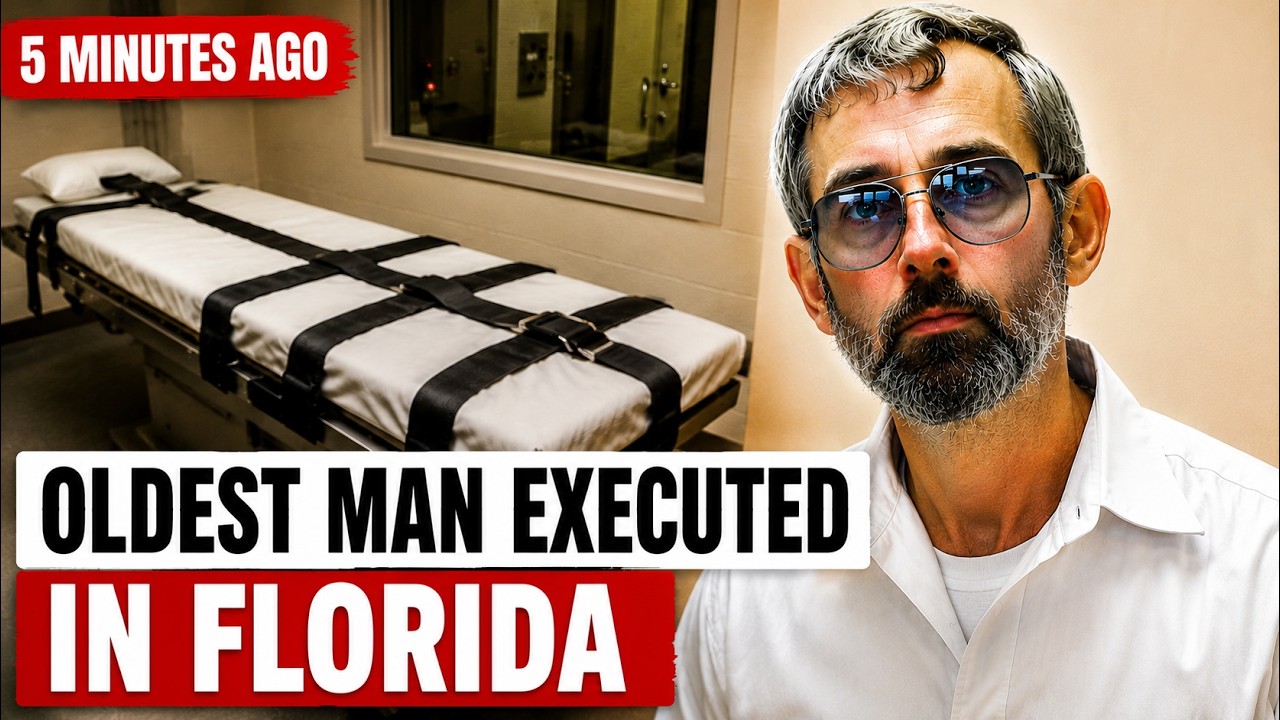
On June 25, 2026, Dusty Ray Spencer is set to face execution by lethal injection at Florida State Prison, marking a chilling milestone as he could become the oldest person ever executed in the state’s history at the age of 74. This case, spanning over three decades, raises profound questions about justice and the passage of time.
 Spencer has been on death row for an astonishing 34 years, a timeline that surpasses the lifespan of many individuals today. His case is not merely a tale of a single tragic event but rather a complex narrative of escalating violence and a troubled relationship that culminated in the tragic death of his wife, Karen Spencer, in January 1992.
In the early 1990s, Dusty and Karen were running a painting business together in Orange County, Florida. Their partnership, however, was marred by a history of domestic violence and turmoil. The couple, along with Karen’s teenage son, Timothy, lived in a household that had seen its share of police interventions and legal troubles, a pattern that would tragically lead to the fateful day of January 18, 1992.
On that day, Timothy was awakened by his mother’s screams. Rushing outside, he witnessed a horrifying scene: Dusty was brutally attacking Karen with a brick. In a desperate attempt to save her, Timothy grabbed a rifle but was met with a misfire. Instead, he struck Dusty with the rifle, but the assault on Karen continued. Despite Timothy’s efforts to intervene, Dusty’s violence escalated, leading to Karen’s death just moments later.
 Authorities found Karen with multiple stab wounds and signs of severe blunt force trauma. Dusty was arrested at the scene, having not fled or hidden from law enforcement. The evidence was overwhelming, and Timothy’s eyewitness account added a heartbreaking layer to the tragedy. This was not an isolated incident; it was the culmination of a series of violent episodes that had been documented and reported to the police.
The events leading up to Karen’s death revealed a troubling history of 𝓪𝓫𝓾𝓼𝓮. Just weeks prior, Dusty had been arrested for choking and threatening Karen after a dispute over money. Even while incarcerated, he reportedly made threats against her life, vowing to “finish what he started.” Despite these warnings, Karen requested his return home for the holidays, a decision that would ultimately lead to her demise.
Dusty’s trial in November 1992 was marked by emotional testimony, especially from Timothy, who had to recount the harrowing experience of watching his mother being killed. The defense attempted to argue for leniency based on Dusty’s mental health, but the jury found him guilty on multiple charges, including first-degree murder. The jury’s recommendation for the death penalty was not unanimous, with a significant portion believing he should receive a life sentence instead.
In a twist of fate, the Florida Supreme Court later vacated the death sentence, citing errors in the trial process. Dusty was resentenced to death three years later, on the anniversary of Karen’s murder, with the judge citing aggravating factors that included the heinous nature of the crime. This sentence was upheld after further appeals, but the legal battles continued for decades
As Spencer approaches his execution date, significant questions linger regarding the implications of age and health on justice. Now suffering from liver disease, he is described as a different man than the one who committed the crime 34 years ago. His attorneys argue that his long incarceration should be considered a form of punishment, and that executing an elderly, ill man serves no purpose beyond retribution.
 The debate surrounding Spencer’s case is further complicated by the financial implications of capital punishment. In Florida, housing death row inmates is significantly more expensive than standard incarceration, raising concerns about the efficiency and morality of pursuing such sentences in cases that have lingered for decades.
As the clock ticks down to June 25, the legal landscape remains fraught with unresolved issues, including challenges to the lethal injection protocol. Governor Ron DeSantis signed Spencer’s death warrant in May, and unless a last-minute intervention occurs, the execution will proceed as planned.
Karen Spencer’s tragic story is a haunting reminder of the violence that can exist behind closed doors. Her death has reverberated through the years, impacting not only her family but also the legal system that continues to grapple with the implications of this case. As we approach the execution date, one question remains: does the passage of time alter the meaning of justice for those affected by this tragedy?