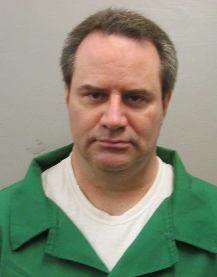
In a haunting culmination of a two-decade-long legal battle, Missouri executed Lance Shockley on October 14, 2025, for the murder of State Trooper Carl Dwayne Graham Jr. The 48-year-old was pronounced dead by lethal injection at the Eastern Reception, Diagnostic, and Correctional Center, leaving behind a complex legacy of tragedy and unresolved questions
 Shockley had consistently maintained his innocence, even as he lay strapped to a gurney in the Stark Execution Chamber. As the lethal drugs began to flow, he attempted to communicate with loved ones watching from behind soundproof glass, a poignant moment that marked the end of a long and painful saga. At 6:13 p.m., he was declared dead, closing a chapter that began with a deadly crash on a rural Missouri highway in 2004.
The events leading to Shockley’s execution were set in motion on November 26, 2004, when he was involved in a tragic accident that claimed the life of his friend, Jeffrey Bis. After the crash, Shockley fled the scene, seeking help at a nearby home but leaving his friend behind. The investigation led by Sergeant Graham quickly identified Shockley as a suspect, but the case took a dark turn when Shockley allegedly ambushed the trooper in a chilling act of violence.
 On March 20, 2005, Shockley executed a plan to eliminate Graham, who was investigating him for the fatal accident. As Graham returned home from his shift, Shockley shot him from behind, delivering a fatal blow that shocked the community. The murder sent ripples of grief through law enforcement and the public alike, marking a profound loss for the region.
In the aftermath, Shockley attempted to cover his tracks, but investigators quickly pieced together the evidence linking him to the crime. Despite a lack of a murder weapon, circumstantial evidence mounted against him, leading to his arrest days later. Charged with first-degree murder and armed criminal action, Shockley’s trial began in 2009, where he was ultimately found guilt

The years that followed were filled with appeals and legal maneuvers, as Shockley’s defense team sought to overturn the death sentence imposed by a judge after a jury deadlocked on the penalty phase. Despite numerous challenges, including claims of jury misconduct and calls for DNA testing, the courts upheld the conviction.
 As the execution date approached, Shockley spent his final hours with family, opting for a simple last meal of peanut butter and oatmeal. His execution drew attention not only for its emotional weight but also for the ongoing debates surrounding the death penalty in Missouri. Shockley’s case reignited discussions about the power of judges in capital cases, as many questioned the implications of a single juror’s dissent being overridden.
In his final moments, Shockley delivered a message filled with scripture, leaving behind a promise of reunion for his loved ones. As the lethal injection took effect, witnesses on both sides experienced a mix of sorrow and relief, reflecting the emotional complexity surrounding the case.
The execution of Lance Shockley marks a significant moment in Missouri’s history, being the first execution of 2025. As reactions poured in from both supporters and opponents of the death penalty, the case remains a poignant reminder of the far-reaching consequences of violence and the quest for justice. With lingering questions about the truth of Shockley’s claims, the community is left to ponder the lasting impact of this tragic saga. What does justice truly mean in the face of such profound loss?