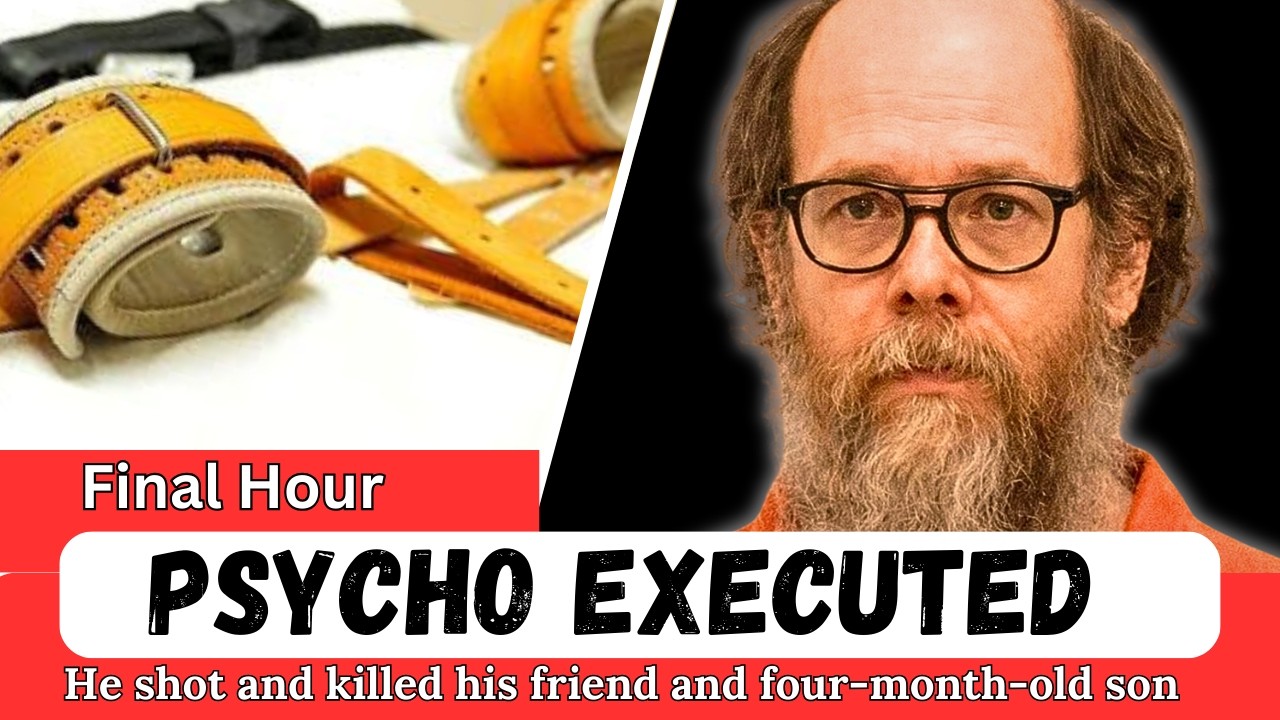
The Ohio Supreme Court has unanimously affirmed the death sentence for Thomas Knuff, the convicted double murderer who killed his longtime pen pal and her boyfriend just 30 days after being released from prison.
Knuff, 51, now sits on Ohio’s death row at the Chillicothe Correctional Institution, awaiting an execution that may never come as the state’s lethal injection program remains effectively frozen.
 The court rejected all 24 arguments raised by Knuff’s defense, including claims of self-defense and prosecutorial misconduct. Justice Joseph T. Deters wrote that the evidence “strongly supports the jury’s rejection of Knuff’s self-defense claim.”
The brutal crimes unfolded in May 2017 in a modest home on Nelwood Road in Parma Heights, a Cleveland suburb. Knuff had been free for exactly 30 days after serving 15½ years for aggravated robbery.
Regina Capobiano, 50, had written to Knuff for a decade through a prison pen pal program. She believed in second chances. She and her boyfriend, John Man, 65, picked him up from prison and gave him a place to stay.
On the night of May 11, 2017, an argument erupted. Knuff grabbed a knife and stabbed Capobiano six times then attacked Man, stabbing him 15 times. The defensive wounds on Man’s hands showed he fought desperately.
Knuff wrapped the bodies in blankets and garbage bags, leaving them to decompose in a back bedroom for six weeks. He scrubbed the bloodstained carpets and used so much water the utility company flagged the spike.
He even plotted to dismember the bodies like the TV show Dexter, buying hacksaws and blades. But he never carried out the plan. Instead, he burglarized two businesses and stole over $1,000.
When police finally found the remains on June 21, 2017, the scene was so horrific that Parma Heights Police Chief Daniel Teal called it one of the toughest his detectives had ever encountered.
 During the 2019 trial, prosecutors presented DNA evidence, cell phone records, and chilling letters Knuff wrote from jail trying to arrange arson to destroy the bodies. Alicia Stoner, the former prison social worker who had fallen in love with Knuff, testified against him.
Knuff’s defense claimed self-defense, arguing that Capobiano had been stabbing Man and Knuff intervened. The jury deliberated only two days before convicting him on all counts, including aggravated murder, aggravated burglary, and kidnapping.
At sentencing, Judge Dena Calibracy said, “As a defendant in my courtroom, I have hardly seen someone with so little remorse as you.” She imposed death on both murder counts plus 37 additional years.
Knuff showed no remorse. He told the court, “Everybody’s going to have to answer for it,” accusing police and prosecutors of lying.
The Ohio Supreme Court’s March 14, 2024 decision affirmed the sentence. Justice Deters noted that Knuff’s own accounts were inconsistent and that the physical evidence contradicted his self-defense narrative.
But the death penalty in Ohio is effectively on hold. Governor Mike DeWine has said lethal injection is “impossible from a practical point of view” because pharmaceutical companies refuse to supply the necessary drugs.
 No execution date has been set for Knuff. Five executions scheduled for 2025 have already been delayed until 2028. Death row inmates now spend an average of 17 years awaiting execution.
Jonathan Man, the son of victim John Man, has become an outspoken opponent of capital punishment. He works with Ohioans to Stop Executions and has written that the death penalty only extends his family’s suffering.
“When Knuff was sentenced to death, I too was sentenced to decades of pain, excruciating uncertainty, and reliving the worst day of my life over and over again,” Jonathan wrote.
Regina Capobiano’s sister, Tony Bender, testified about her sibling’s struggles with addiction and her belief that people could change. “She understood what it was like to make mistakes,” Bender said.
Knuff’s criminal history dates to his early adult years: armed robbery, safe cracking, breaking and entering. He held a man at gunpoint at an ATM and threatened a clerk with a box cutter.
In prison, he completed anger management, victim awareness, and life skills courses. He told the parole board he was a changed man. They believed him.
 He was released on April 11, 2017.
Within 30 days, he killed the two people who had welcomed him into their home. The case raises uncomfortable questions about rehabilitation and whether the system can truly identify those who remain dangerous.
Knuff remains in a 6-by-9-foot cell on death row. He spends 23 hours a day alone. The man who claimed he wanted to become a productive member of society now faces decades of legal appeals with no end in sight.
For the families of Regina Capobiano and John Man, the waiting continues. The trial is over, but the trauma renews with every court filing and news report. Jonathan Man calls it a “sentence of uncertainty.”
Ohio’s death penalty moratorium means Knuff may never be executed. He could die of natural causes on death row. In the meantime, he maintains his innocence, insisting he is the victim of a conspiracy.
The house on Nelwood Road has been demolished. Neighbors say they still remember the smell that lingered for weeks before the bodies were found. The street is quiet now, but the memory of the violence endures.
Thomas Knuff’s story is a cautionary tale about manipulation, misplaced trust, and the limits of the justice system. A woman who believed in redemption paid with her life. A kind man who opened his home was repaid with 15 stab wounds.
The Ohio Supreme Court has spoken. The law has run its course. But for those left behind, there is no closure, only the slow, grinding machinery of a death penalty system that may never deliver the final sentence.